
Pruning hook or spear?
gardening is an analogy for everything

This is the season of sprouting seeds - carrots and radishes and sweet peas. Cold weather crops - brassicas and lettuce. Last Friday was the traditional day for planting potatoes. Morel foraging season is beginning. Only one week until the regional last-frost date.
My garden has been a labor of love (and heartbreak) for 15 years. It is my claim to a connection with nature, to environmentalism (belied by the plastic bags of soil amendments), to my children’s knowledge of the Earth.
I need to repot my plants, or transfer some of them outside. I’m afraid I’ll lose them, like some of the leafy greens I risked with a hopeful, too early transplant. But gardening requires persistence and setting aside perfectionism. The acceptance of failure and willingness to press forward, make adjustments, and understand that those changes may or may not work better than last time. It feels like creativity, because it is the growth of beauty. But in fact, it’s more method than art.
The year I birthed my first child, a hail storm cut down some of my tomato plants, and the squirrels finished off every bit of fruit. My father came over while I nested and constructed a cage made of green plastic fencing so that I could perhaps achieve my dream of producing enough to can, a practice I had picked up a few years prior. A practice that, like the garden, represented so much to me - commitment to locally grown produce, environmentalism, subsidiarity, self-sufficiency. A practice that, even when it meant this much, was almost always a disappointment, with 8 people-hours of work producing just a dozen quart jars of diced tomatoes.
In the end, the squirrels ate through the plastic fencing and continued their campaign of destruction. I was too tired out by my newborn to can tomatoes, anyway.
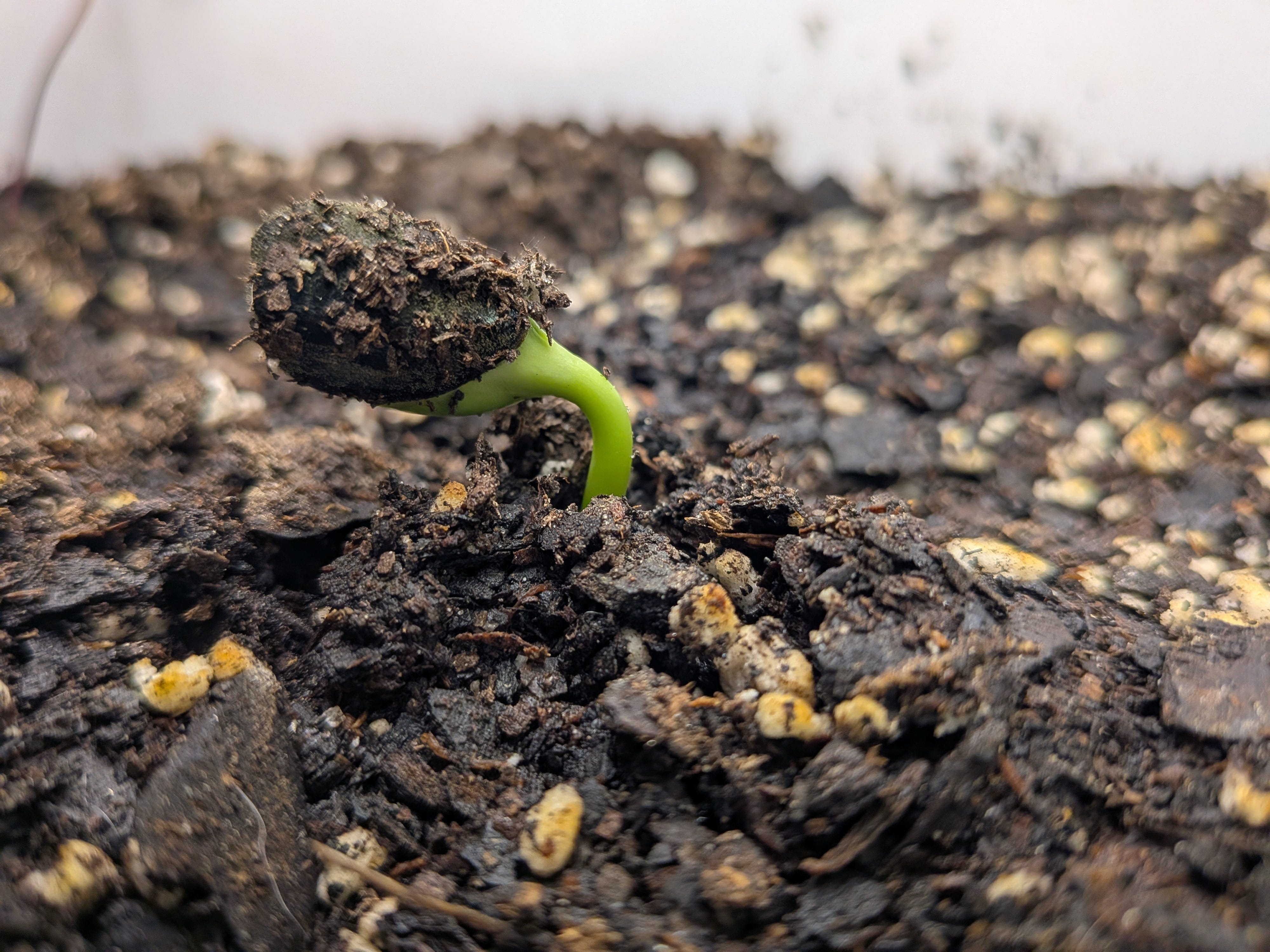
Several years later, I decided to grow my plants from seed, rather than spending the money on seedlings. With investments in a grow light and a heat mat, they stretched upwards as expected, my tiny seed babies slowly maturing along the same timeline as the tiny real baby I had learned was in my womb.
During Lent, with a month still to go till last-frost date, I started bringing the seeds out on nice-enough days to harden off. But while I didn’t lack in romanticism, perhaps I can blame my first trimester exhaustion for the fact that I left them outside on the night of a frost. Every single one wilted, died. As did, within days, the babe in my belly.
I avoided starting seeds for years afterwards. But this year, I broke out the grow light and heat pad. I’ve successfully brought out the trays to harden off, and I’ve remembered to bring them inside thus far. I planted a couple plugs of greens outside too early. But I haven’t despaired, and I haven’t failed. I press onward, day by day, plugging in the grow light, watering as needed, offering a pinch of fertilizer from time to time. I monitor the forecast and planting guides so I can dream of the day they will make it into the ground, hopefully destined to thrive.
But even if they make it to that point, there are still squirrels in waiting.
I share to recontextualize this season. Spring, blooms, Easter - they all speak of hope to those who do not labor. But I do not feel hope. For many people throughout history, and still today, the changing seasons have not offered relief from the oppression they faced.
I share to remind myself that this lack of hope, like my gardening efforts, is not a failure. Hope is not a required outcome of spring blooms. For a farmer, I suspect the season is one of work, planning to accommodate rain and planting schedules, worry combined with the hope that this year’s harvest will be plentiful. Strong seedlings bode well, but the challenges do not end upon planting them in the ground.
But I press on. Over the years, I have learned that garlic, kale, and herbs consistently grow well in my garden. The neighbor’s blackberry brambles crossed the fence line, and I’ve allowed them to spread through one of my beds. I’ve switched to cherry tomatoes, since there are usually enough to share between the squirrels and my children.
So, too, we press on in the public sphere. Crying out for peace. Demanding justice for those imprisoned. Seeking liberty for those afraid to leave their homes.
I want the long arc towards justice to be smooth, with steady progress towards our goal. But not every seed flourishes. Not every seedling survives. I lose some of my cases, and my clients are deported, their families shattered. I return again and again, determined. Because even when the crops fail, I’d rather be wielding a pruning hook than a spear.